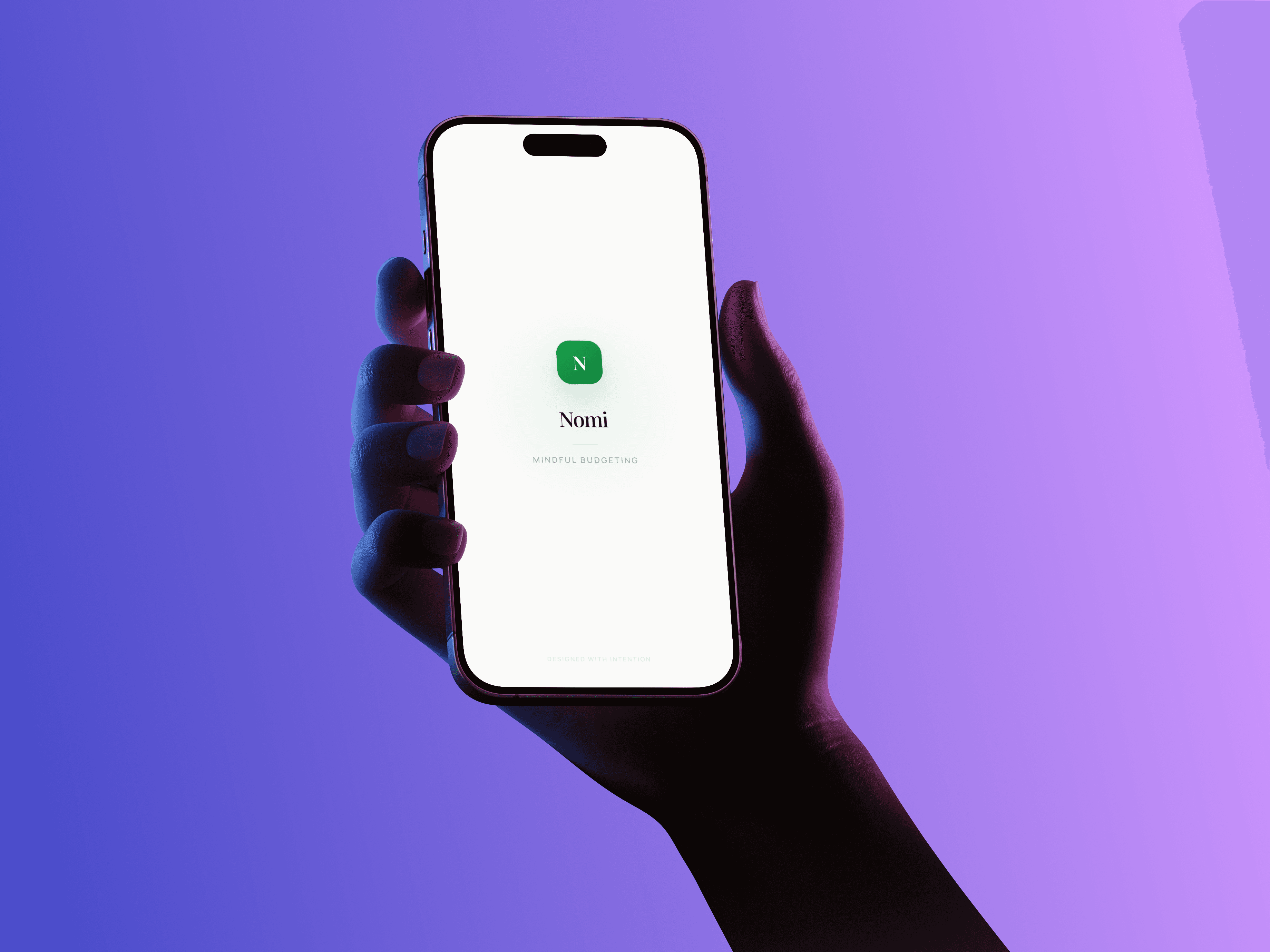
Nomi Budgeting app
Nomi Budgeting app
I built this because I wanted to track expenses without connecting my bank or managing syncs. Apps like Monefy exist, but they are built for Western markets and feel adapted for India rather than designed for it. I wanted something that felt native from the start. One idea drove the whole thing: clarity over guilt. Track spending, understand patterns, see progress month over month.
The Problem
The Problem
The most important design decisions in a consumer product are not visual. They are emotional. Most budgeting apps show you what you spent, assign it a colour, and leave the guilt sitting there. The information does not go anywhere. It just accumulates.
The most important design decisions in a consumer product are not visual. They are emotional. Most budgeting apps show you what you spent, assign it a colour, and leave the guilt sitting there. The information does not go anywhere. It just accumulates.
The Problem
The most important design decisions in a consumer product are not visual. They are emotional. Most budgeting apps show you what you spent, assign it a colour, and leave the guilt sitting there. The information does not go anywhere. It just accumulates.
The Product Decision
The Product Decision
Nomi tracks spending. Nothing else. No bank transfers, no payment integrations. Every feature that got cut was cut because it added surface area without adding clarity. The retention hook is month-over-month progress. Seeing you spent less on food this month than last is more motivating than a streak counter that resets when you miss a day, because it is true.
Nomi tracks spending. Nothing else. No bank transfers, no payment integrations. Every feature that got cut was cut because it added surface area without adding clarity. The retention hook is month-over-month progress. Seeing you spent less on food this month than last is more motivating than a streak counter that resets when you miss a day, because it is true.
The Product Decision
Nomi tracks spending. Nothing else. No bank transfers, no payment integrations. Every feature that got cut was cut because it added surface area without adding clarity. The retention hook is month-over-month progress. Seeing you spent less on food this month than last is more motivating than a streak counter that resets when you miss a day, because it is true.
Design Decisions
Design Decisions
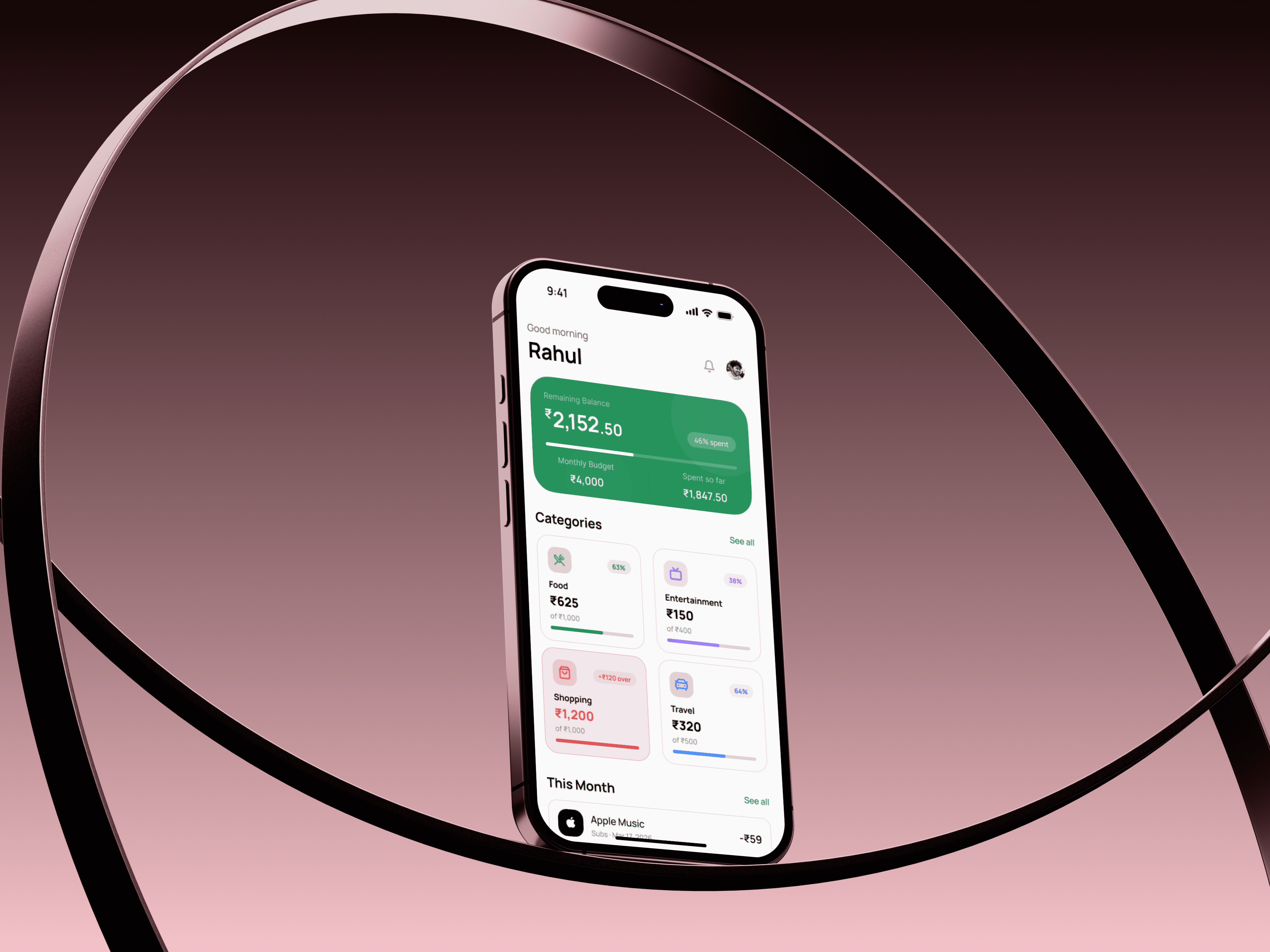
The merchant logo system fetches real logos automatically through a three-step fallback chain: Hunter.io as the primary source, CompanyEnrich as the first fallback, and Google Favicons as the final net, so something always shows up. Lucide stroke icons over emojis throughout. Indian number formatting and Rupee symbols everywhere. The onboarding tone is calm. The app does not remember overspending. It shows you what happened and resets the next month.
The merchant logo system fetches real logos automatically through a three-step fallback chain: Hunter.io as the primary source, CompanyEnrich as the first fallback, and Google Favicons as the final net, so something always shows up. Lucide stroke icons over emojis throughout. Indian number formatting and Rupee symbols everywhere. The onboarding tone is calm. The app does not remember overspending. It shows you what happened and resets the next month.
Design Decisions
The merchant logo system fetches real logos automatically through a three-step fallback chain: Hunter.io as the primary source, CompanyEnrich as the first fallback, and Google Favicons as the final net, so something always shows up. Lucide stroke icons over emojis throughout. Indian number formatting and Rupee symbols everywhere. The onboarding tone is calm. The app does not remember overspending. It shows you what happened and resets the next month.
Reflection
Reflection
Nomi is where I stopped thinking about screens and started thinking about a product. The most interesting problem was not visual. It was figuring out how to make progress feel real when the data does not always support that reading. Month-over-month framing was the answer.
Nomi is where I stopped thinking about screens and started thinking about a product. The most interesting problem was not visual. It was figuring out how to make progress feel real when the data does not always support that reading. Month-over-month framing was the answer.
Reflection
Nomi is where I stopped thinking about screens and started thinking about a product. The most interesting problem was not visual. It was figuring out how to make progress feel real when the data does not always support that reading. Month-over-month framing was the answer.


More Works More Works
More Works More Works